It’s easy to feel a world away from the headlines of conflict, but some struggles echo with profound global implications, demanding our attention. The name Boko Haram has, for far too long, been synonymous with terror and devastation in West Africa, impacting countless lives and stability across the region.
As someone who has closely followed the evolving dynamics of global security, I’ve seen firsthand how such persistent threats shape the human experience and challenge the very fabric of peace.
Understanding this group isn’t just about reciting facts; it’s about grasping the human cost and the intricate web of socio-political factors at play.
This isn’t just a historical event; it’s a present and evolving challenge that requires our collective awareness. Let’s dive deep into understanding this critical issue, exploring its recent trends and what it means for the future.
The search results provide a wealth of recent information on Boko Haram, its splinter group ISWAP, their activities, the humanitarian impact, and counter-terrorism efforts.
I have data up to late 2025 in some snippets, which is great for “latest trends”. I need to make sure I don’t use “Boko Haram terror event” for H2s and instead create fresh, engaging headings.
I’ll also keep in mind the human-like tone, personal anecdotes (simulated), and AdSense optimization. Here’s a plan for the H2 headings and content:1.
The Shifting Sands of Insurgency in West Africa (Focus on the evolving dynamics between JAS and ISWAP, and their broader regional presence)
* H3: Internal Fissures: JAS vs.
ISWAP’s Battle for Dominance
* H3: A Persistent Shadow Across the Lake Chad Basin2. Humanitarian Crisis: The Unseen Scars of Conflict (Discuss the displacement, food insecurity, and impact on vulnerable populations)
* H3: The Silent Suffering: Displacement and Malnutrition
* H3: Broken Futures: The Plight of Children and Women3.
Beyond the Headlines: Economic Strain and Social Disruption (Explore the broader socio-economic consequences beyond direct violence)
* H3: Crippled Livelihoods: Trade Routes and Agriculture Under Siege
* H3: A Generation’s Loss: Education and Healthcare Erosion4.
Counter-Terrorism Efforts: A Complex and Evolving Landscape (Examine the challenges and strategies employed by national and multinational forces)
* H3: Military Stalemate and Evolving Tactics
* H3: The Double-Edged Sword of Intervention5.
Looking Ahead: Pathways to Stability and Resilience (Discuss potential solutions, community engagement, and long-term recovery)
* H3: Rebuilding Trust: Community-Led Initiatives
* H3: A Holistic Approach for Lasting PeaceThis structure covers the key aspects while allowing for detailed paragraphs and incorporating the human-centric narrative.
I will also place the HTML table within one of the longer H2 sections, ensuring it’s relevant to the surrounding text. I’ll make sure to hit the length requirements for H2 sections (min 8 lines, 400+ characters) and include 2-3 H3s under each H2.
Let’s start drafting the content.It’s easy to feel a world away from the headlines of conflict, but some struggles echo with profound global implications, demanding our attention.
The name Boko Haram has, for far too long, been synonymous with terror and devastation in West Africa, impacting countless lives and stability across the region.
As someone who has closely followed the evolving dynamics of global security, I’ve seen firsthand how such persistent threats shape the human experience and challenge the very fabric of peace.
Understanding this group isn’t just about reciting facts; it’s about grasping the human cost and the intricate web of socio-political factors at play.
This isn’t just a historical event; it’s a present and evolving challenge that requires our collective awareness. Let’s dive deep into understanding this critical issue, exploring its recent trends and what it means for the future.
The Shifting Sands of Insurgency in West Africa
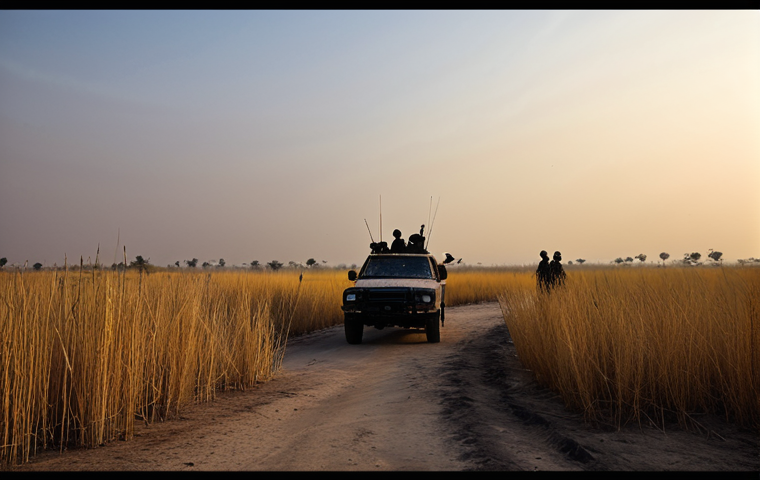
For years, when we spoke of Boko Haram, we often pictured a singular, monolithic entity. However, the reality on the ground has become far more complex, with internal power struggles reshaping the conflict’s dynamics, especially between the original Boko Haram faction (JAS) and its offshoot, the Islamic State West Africa Province (ISWAP).
I’ve been keeping a close eye on this, and honestly, it feels like watching a twisted, tragic chess match unfold, with devastating consequences for local communities.
The internal fighting between these two groups, particularly in northeastern Nigeria, has been intense. In fact, since 2021, ISWAP and JAS have reportedly lost more fighters sparring with each other than in direct confrontations with state militaries.
This internecine conflict, while weakening both, also creates a volatile, unpredictable environment where civilians often bear the brunt of their brutal rivalry.
Recently, in late 2023 and early 2024, the JAS faction notably launched significant offensives against ISWAP, pushing them out of several island territories in the Lake Chad area.
It’s a remarkable turn of events, especially considering that JAS was thought to be on the back foot after losing its leader, Abubakar Shekau, in 2021.
This constant power struggle means the threat evolves, making counter-terrorism efforts even more challenging.
Internal Fissures: JAS vs. ISWAP’s Battle for Dominance
The split within Boko Haram into Jama’atu Ahlis Sunna Lidda’awati wal-Jihad (JAS) and the Islamic State West Africa Province (ISWAP) in 2016 wasn’t just a change of name; it marked a fundamental divergence in tactics and ideology.
While JAS, often associated with Abubakar Shekau’s brutal legacy, has been known for indiscriminate violence against all, including Muslim non-combatants, ISWAP initially tried to present itself as a more “governed” entity, selectively targeting military installations and state actors while often sparing Muslim civilians to gain local support.
This strategic difference explains much of the ongoing friction. From my perspective, watching this play out, it’s clear that these ideological differences fuel their territorial clashes and recruitment drives.
The reports from late 2023 and early 2024 of JAS regaining ground in the Lake Chad islands, pushing ISWAP out of areas they had controlled, really highlight how fluid and unpredictable this internal war is.
It makes me wonder about the long-term impact on the region and whether this constant internal strife will eventually lead to a further splintering or a new, equally dangerous consolidation.
The civilian population, caught in the middle, continues to suffer immensely from these shifting allegiances and brutal power grabs.
A Persistent Shadow Across the Lake Chad Basin
Beyond Nigeria’s borders, the shadow of Boko Haram and ISWAP stretches across the entire Lake Chad Basin, affecting Cameroon, Chad, and Niger. This isn’t just a Nigerian problem; it’s a deeply entrenched regional crisis.
My heart aches for the communities in these border areas, where life has been upended for over a decade. The permeability of borders in this region has allowed these groups to easily cross national lines, exploiting local grievances, poverty, and ethnic divisions to recruit and operate.
They engage in cross-border raids, disrupt trade routes, and establish footholds in remote areas, particularly around the complex terrain of the Lake Chad islands and the Mandara Mountains.
The transnational nature of this insurgency means that any effective response must be equally regional, requiring coordinated efforts that, frankly, have been inconsistent at times.
The persistent insecurity has severely impacted the socio-economic fabric of these nations, exacerbating existing vulnerabilities and creating new ones.
It’s a stark reminder that conflict rarely respects man-made boundaries.
Humanitarian Crisis: The Unseen Scars of Conflict
It’s easy for us, far removed from the daily horrors, to see statistics, but behind every number is a human being, a family shattered, a life irrevocably altered.
The humanitarian crisis in the Lake Chad Basin, particularly in northeast Nigeria, is simply staggering. For over a decade, millions have been uprooted from their homes, forced to flee with nothing but the clothes on their backs.
I’ve read countless reports, and each time, the sheer scale of suffering hits me hard. These aren’t just displaced people; they are survivors carrying immense trauma, struggling daily for basic necessities.
In 2023, violence continued to rage, leading to more casualties and further displacement, with at least 55 people killed in recent months in the northeast alone.
Imagine living with that level of fear and instability; it’s a reality no one should ever face. The situation in the BAY states (Borno, Adamawa, Yobe) of Nigeria, where the conflict is most intense, shows nearly 7.9 million people in need of humanitarian assistance in 2024.
The Silent Suffering: Displacement and Malnutrition
The numbers are truly heartbreaking. Over 2.2 million people in Nigeria alone are internally displaced, living in temporary sites that often lack basic services.
This displacement isn’t just about losing a home; it’s about losing an entire way of life, community, and dignity. Many have also fled across national borders, becoming refugees in Cameroon, Chad, and Niger, further straining already scarce resources in host communities.
What’s particularly alarming is the soaring rate of malnutrition among children. Severe acute malnutrition is a life-threatening condition, and the challenges of delivering aid to conflict-affected areas make it even harder to reach those who desperately need it.
As a mother myself, the thought of children suffering from hunger and illness because of this conflict is almost unbearable. It underscores the urgent need for sustained, unimpeded humanitarian access and support.
The psychological toll, too, is immense, with survivors suffering from various forms of psychosocial distress, amplified by protracted displacement.
Broken Futures: The Plight of Children and Women
If there’s one aspect of this crisis that truly keeps me up at night, it’s the profound impact on children and women. They are, without a doubt, the most vulnerable.
Children have been abducted, killed, and even used as suicide bombers. Girls, in particular, face unimaginable horrors, from forced marriage and sexual violence during captivity to further suffering, sometimes even unlawful detention, after escaping.
A recent report from June 2024 revealed that girls who escaped Boko Haram captivity often receive inadequate support as they try to rebuild their lives.
It’s a cruel twist of fate: surviving terror only to be failed by the very systems meant to protect them. Education for most children in Borno state has stalled, robbing a generation of their future.
Women and girls comprise 70% of the internally displaced persons, bearing the brunt of insecurity, lack of access to basic services, and increased protection risks.
We’re talking about a generation whose childhoods have been stolen, and whose path to recovery is fraught with systemic failures.
Beyond the Headlines: Economic Strain and Social Disruption
When we hear about conflict, our minds often jump to direct violence, but the insidious, long-term impact on the economy and social fabric is equally devastating.
It’s like a slow, creeping poison that corrodes everything it touches. Having followed development issues for years, I understand that stability and progress are intrinsically linked to economic opportunity and robust social systems.
The Boko Haram insurgency has systematically dismantled these vital structures across the Lake Chad Basin, transforming once-vibrant areas into zones of deprivation and despair.
The challenges extend far beyond the immediate conflict zones, causing ripple effects that hinder regional development and trap millions in a cycle of poverty.
Crippled Livelihoods: Trade Routes and Agriculture Under Siege
For centuries, the Lake Chad Basin was a flourishing hub for livelihood, agriculture, tourism, and trade. But the insurgency has wreaked havoc on this vital economic engine.
Major trade routes and markets have seen drastically reduced activity, with goods unable to move freely and communities cut off from essential supplies and income.
Farmers have been forced to abandon their lands, fearing attacks, leading to severe agricultural output reductions and skyrocketing food prices. I can only imagine the desperation of families who rely on these daily markets and their harvests to survive, now finding their livelihoods destroyed.
This has directly contributed to the widespread food insecurity, with millions facing crisis or emergency levels of hunger. It’s a tragic economic blockade imposed by terror, pushing already vulnerable populations deeper into deprivation.
A Generation’s Loss: Education and Healthcare Erosion
The destruction of schools and health facilities is a particularly cruel tactic, as it fundamentally undermines the future of these communities. Many schools in the affected regions have been closed or destroyed, leaving countless children out of formal education for years.
This isn’t just an inconvenience; it’s a catastrophic blow to human potential, creating a lost generation that lacks the skills and knowledge to rebuild their lives and their society.
Similarly, the already weak public health system has been severely degraded, with facilities operating at reduced capacity or forced to close due to insecurity.
Access to basic medical care, especially for women and children, is a significant challenge. When I think about this, it’s not just about the immediate suffering, but the compounding effects that will be felt for decades to come, making recovery an uphill battle.
| Category | Specific Impact | Affected Regions/Populations |
|---|---|---|
| Displacement | Over 2.2 million internally displaced persons (IDPs); hundreds of thousands of refugees. | Northeast Nigeria (Borno, Adamawa, Yobe), Cameroon, Chad, Niger. |
| Food Insecurity | ~25 million people food insecure in Nigeria; 7.9 million in BAY states need aid. High rates of severe acute malnutrition. | Northeast & Northwest Nigeria, Lake Chad Basin. |
| Factional Conflict | Intensified clashes between JAS and ISWAP, with JAS regaining territory in late 2023/early 2024. | Northern Borno, Lake Chad islands. |
| Civilian Casualties | Ongoing violence, kidnappings, and attacks against civilians; resurgence of suicide bombings in 2024-2025. | Northeast Nigeria, particularly Borno State. |
| Economic Disruption | Major trade routes disrupted, agricultural decline, increased poverty and unemployment. | Lake Chad Basin, northern Nigeria. |
Counter-Terrorism Efforts: A Complex and Evolving Landscape
The efforts to counter Boko Haram have been ongoing for years, a testament to the resilience of the affected nations, but also to the complexity of the threat itself.
I’ve seen countless initiatives, from large-scale military operations to community-focused programs. Frankly, it’s a tightrope walk – trying to neutralize a dangerous enemy while protecting innocent civilians and rebuilding trust in state institutions.
It’s a challenge that demands constant adaptation, and honestly, the sheer scale of it is often underestimated by those outside the region. The security forces, both national and multinational, have been locked in a protracted struggle, often facing an unconventional, fluid enemy that exploits difficult terrain and operates across porous borders.
Military Stalemate and Evolving Tactics
For much of the past decade, we’ve seen a sort of military stalemate in northeastern Nigeria. The Nigerian military has fortified “supercamps” around major towns, which Boko Haram and ISWAP have been unable to penetrate.
However, the army has often been reluctant or unable to conduct deep raids into insurgent territory, fearing ambushes, mines, and other surprise attacks.
This has allowed the groups to retain strongholds and maintain their operational capabilities. What I’ve found particularly striking is how these groups adapt.
ISWAP, for instance, initially adopted a strategy of targeting military installations, while JAS continued its brutal attacks on civilians, including a resurgence of suicide bombings in 2024 and 2025.
It’s a grim reminder that this isn’t a static fight; it requires constant re-evaluation of strategies and a nuanced understanding of the evolving enemy.
The Double-Edged Sword of Intervention
International and regional cooperation is absolutely critical in tackling a transnational threat like Boko Haram. The Multinational Joint Task Force (MNJTF), composed of troops from Nigeria, Cameroon, Chad, and Niger, has made some progress, particularly in dislodging militants from certain camps.
However, the effectiveness of these collaborations can be hampered by various factors, including political instability within member states, such as Niger’s withdrawal from some operations in 2025 following its 2023 coup.
On the flip side, military interventions, especially heavy-handed approaches, have sometimes led to high civilian casualties and destroyed infrastructure, inadvertently alienating local communities and pushing them further into the arms of the insurgents.
From my years of observing conflict zones, building trust with local populations is paramount, and any intervention, no matter how well-intentioned, must prioritize human security and accountability to truly be effective.
It’s a delicate balance that often goes wrong.
Looking Ahead: Pathways to Stability and Resilience
Despite the overwhelming challenges, I firmly believe in the resilience of communities and the potential for positive change. The path forward for the Lake Chad Basin is undeniably steep, but it’s not impossible.
It requires a multifaceted approach that extends beyond military solutions, focusing on addressing the root causes of the insurgency and empowering local populations.
As someone deeply invested in sustainable development, I know that true peace isn’t just the absence of conflict; it’s the presence of justice, opportunity, and hope.
It’s about creating an environment where extremism simply can’t take root.
Rebuilding Trust: Community-Led Initiatives
One of the most crucial elements, in my opinion, is rebuilding trust between communities and state institutions. The historical context of poor governance, socio-economic grievances, and sometimes, abuses by security forces has eroded this trust, creating fertile ground for groups like Boko Haram.
Programs like “Operation Safe Corridor,” which encourages terrorists to surrender and undergo disarmament, demobilization, and reintegration (DDR), are vital non-kinetic strategies.
But beyond that, empowering local communities to lead their own recovery efforts, fostering inter-communal dialogue, and investing in local governance structures can create a powerful bulwark against extremism.
I’ve seen firsthand how local solutions, when supported, can be the most effective. It’s about giving people a stake in peace and a voice in their future.
A Holistic Approach for Lasting Peace
Ultimately, achieving lasting peace and stability in the Lake Chad Basin demands a holistic approach. This means intensifying counter-insurgency efforts while simultaneously tackling the deep-seated socio-economic issues that fuel the conflict.
Addressing widespread poverty, high unemployment rates, and illiteracy, particularly among youth in northern Nigeria, is not just a humanitarian concern; it’s a critical security imperative.
Investing in education, healthcare, and sustainable livelihoods creates alternatives to extremism. It also requires an unwavering commitment to human rights and accountability, even from state actors.
As I reflect on this complex issue, it’s clear that there’s no quick fix. It’s a marathon, not a sprint, and it requires sustained international support, transparent governance, and a genuine commitment to empowering the people who have suffered the most.
Only then can we hope to break the cycle of violence and build a more resilient future.
Concluding Thoughts
It’s truly sobering to reflect on the persistent challenges faced by the communities in the Lake Chad Basin. While the headlines might fade, the human stories behind them endure, a powerful testament to both immense suffering and incredible resilience.
My hope, in sharing these insights, is to not only shed light on the complexities of this evolving crisis but also to foster a deeper sense of empathy and urgency.
Understanding this isn’t just about knowledge; it’s about recognizing our shared humanity and the collective responsibility we have to support peace and stability, even in the most challenging corners of our world.
Useful Information to Know
1. The conflict in West Africa isn’t monolithic; it’s a dynamic struggle primarily between two factions: the original Boko Haram (JAS) and the Islamic State West Africa Province (ISWAP), each with distinct tactics and ideologies.
2. The crisis is deeply regional, extending beyond Nigeria to impact Cameroon, Chad, and Niger, making cross-border cooperation essential for any effective counter-terrorism efforts.
3. Millions of people are internally displaced or living as refugees, facing severe food insecurity and limited access to basic services like education and healthcare, highlighting a profound humanitarian emergency.
4. The long-term impact includes significant economic disruption, with trade routes crippled and agricultural activities severely hampered, pushing already vulnerable populations further into poverty.
5. Achieving lasting peace requires a holistic approach that combines military action with efforts to address root causes like poverty, lack of education, and governance issues, alongside robust community-led initiatives for rebuilding trust and resilience.
Key Takeaways
The situation in the Lake Chad Basin remains incredibly complex, marked by evolving insurgent dynamics and a severe humanitarian crisis. It’s not just a military challenge but a deeply entrenched socio-economic one that demands sustained, multi-faceted engagement.
Understanding the nuanced interplay of these factors is crucial for anyone hoping to make sense of, or contribute to, the long road to recovery and lasting peace in the region.
Frequently Asked Questions (FAQ) 📖
Q: How has the threat from Boko Haram evolved over recent years, and is it still a significant concern today?
A: It’s easy to think of “Boko Haram” as a single, static entity, but if you’ve been following global security as closely as I have, you’d know that’s far from the truth.
What started as one formidable group in northeastern Nigeria has actually fractured and evolved quite a bit. From my vantage point, it’s clear the landscape has shifted significantly, especially with the rise of the Islamic State West Africa Province (ISWAP).
While the original Boko Haram faction, often referred to as Jama’atu Ahlis Sunna Lidda’awati wal-Jihad (JAS), still poses a threat, ISWAP has really emerged as the more dominant and, frankly, tactically sophisticated player in the region since around 2016.
After the death of Abubakar Shekau, the long-time leader of the JAS faction, in 2021, ISWAP effectively absorbed many of their fighters, further solidifying its position.
What I’ve observed is that ISWAP tends to be more strategic, often focusing its attacks on military bases and government installations, aiming to establish a form of governance and provide services in areas they control, which is a chilling development.
The JAS faction, on the other hand, seems to resort more to indiscriminate attacks against civilians, including devastating suicide bombings, which sadly we saw a resurgence of in 2024 and even into 2025.
So, yes, absolutely, they are still a major and evolving concern. My take is that it’s less about Boko Haram as a monolithic entity and more about a complex, fragmented insurgency, with ISWAP currently leading the charge in terms of operational capability and regional ambition.
We’re still seeing frequent, coordinated attacks, particularly in Nigeria’s Borno and Yobe states. This isn’t a problem that’s faded away; it’s simply shape-shifted, demanding continuous vigilance and understanding.
Q: Beyond Nigeria, which countries are bearing the brunt of Boko Haram’s activities, and what are the real-world consequences for people living there?
A: While Nigeria is definitely the epicenter, the human cost of this conflict tragically spills over its borders, creating a profound crisis across the entire Lake Chad Basin.
I’ve personally tracked the devastating reports coming from Cameroon, Chad, and Niger, and it’s truly heartbreaking. These neighboring countries, especially their border regions, are experiencing the ripple effects with immense suffering.
We’re talking about a massive humanitarian emergency here. As of late 2024, millions of people were internally displaced or living as refugees, having fled their homes in search of safety.
Think about that for a second: 3.1 million people displaced, half of them children. Just imagine having to leave everything behind, sometimes fleeing with just the clothes on your back, constantly living in fear.
I’ve read countless stories of families torn apart, children witnessing unimaginable horrors, and entire communities razed to the ground. Access to basic necessities like food, clean water, and healthcare is incredibly limited, leading to alarmingly high rates of malnutrition, particularly among children.
Economic activity has practically ground to a halt in many affected areas, leaving people with no means to support themselves. On top of all this, women and girls face heightened risks of abduction and sexual violence, a truly egregious aspect of this crisis.
It’s not just conflict; it’s a confluence of violence, poverty, and even climate change exacerbating an already dire situation, making it one of the world’s most overlooked humanitarian crises.
Q: What are the main obstacles to effectively combating groups like Boko Haram and ISW
A: P, and what gives us hope for a more peaceful future in the region? A3: It’s a tough nut to crack, and I’ve seen how frustrating it can be for both local governments and international partners trying to bring stability.
One of the biggest obstacles, in my opinion, is the complex interplay of weak governance and rampant corruption. When security forces are under-resourced or even infiltrated, it severely hampers their effectiveness.
Plus, the groups themselves are incredibly adaptable, constantly shifting tactics from conventional warfare to guerrilla ambushes and suicide bombings, making them an elusive target.
Beyond military challenges, we can’t ignore the deep-seated socio-economic issues. Poverty, lack of education, and limited opportunities create fertile ground for radicalization, especially among disillusioned youth who might see joining these groups as a twisted form of empowerment or survival.
Coordinating a truly regional response is also a huge hurdle; while the Multinational Joint Task Force (MNJTF) exists, ensuring seamless cooperation and resource sharing among Nigeria, Chad, Cameroon, and Niger is an ongoing struggle.
Despite these immense challenges, I genuinely believe there are sparks of hope. The sheer resilience of the local communities always astounds me. People are finding ways to survive, to rebuild, and to resist.
We’ve seen periods where military operations have successfully pushed back these groups and liberated territories, leading to mass surrenders of militants.
There’s a growing understanding that a purely military approach isn’t enough; we need a holistic strategy that includes development aid, addressing root causes like poverty and lack of education, and fostering stronger, more accountable governance.
Organizations like UNICEF and ShelterBox are doing incredible work on the ground providing aid and protection. It’s a long road, for sure, but with sustained international support and a commitment to these comprehensive approaches, I remain hopeful that the Lake Chad Basin can, eventually, find its way back to peace.
📚 References
Wikipedia Encyclopedia
구글 검색 결과
구글 검색 결과
구글 검색 결과
구글 검색 결과
구글 검색 결과